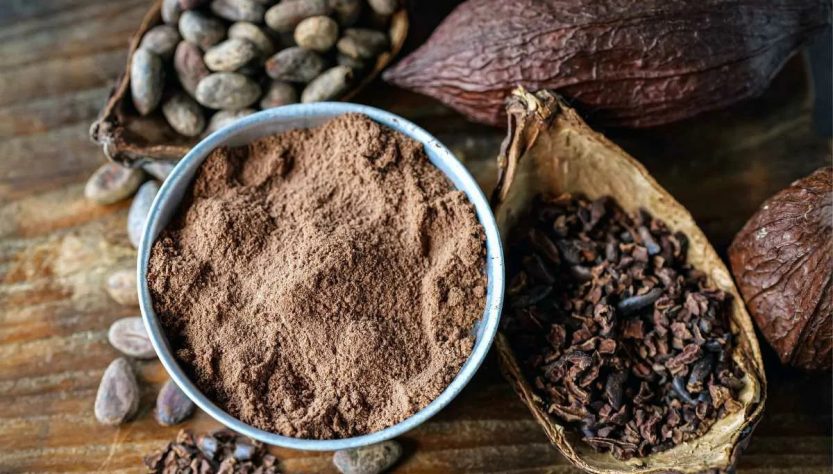
Cacao capsules vs cocoa flavanol extract may look like a comparison between two versions of the same supplement. Both originate from Theobroma cacao, but they are not automatically equivalent. A cacao capsule may contain botanical material derived from the beans, while a cocoa flavanol extract is processed to obtain selected compounds, sometimes with a specified amount per serving.
The distinction matters when one product lists cacao bean material and another advertises a measured quantity of cocoa flavanols. An ingredient weight does not tell you how many milligrams of flavanols the finished product contains.
Secrets Of The Tribe identifies organic Theobroma cacao raw beans as the ingredient in its Cacao Capsules. That description establishes botanical identity, but it does not by itself establish a verified flavanol concentration.
This guide explains the difference between cacao material and standardized extracts, how to interpret supplement labels, and why capsule counts cannot establish equivalent quantities of cocoa flavanols.
Are Cacao Capsules and Cocoa Flavanol Extract Equivalent?
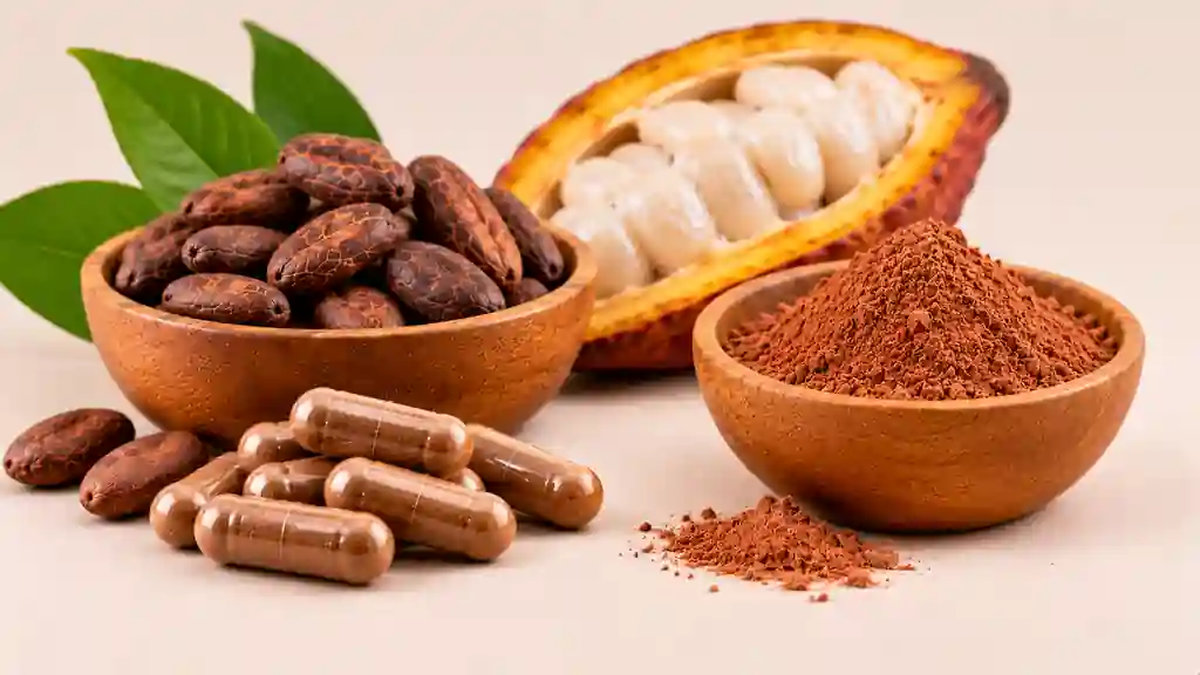
No. Cacao capsules and cocoa flavanol extract capsules are not automatically equivalent, even when both originate from Theobroma cacao. Their processing methods, concentrations, and declared ingredients may differ.
A cacao capsule can contain powdered botanical material or another cacao preparation. A cocoa flavanol extract is manufactured using extraction methods and may be standardized to a specified flavanol concentration.
Quick Comparison: Cacao Capsules vs Cocoa Flavanol Extract
| Characteristic | Cacao Capsules | Cocoa Flavanol Extract |
|---|---|---|
| Botanical source | Theobroma cacao | Theobroma cacao |
| Starting material | Cacao-derived botanical material | Cacao material used for extraction |
| Typical preparation | Powder or another stated cacao preparation | Extract enriched in selected constituents |
| Primary ingredient description | Cacao seed material | Cocoa extract or cocoa flavanols |
| Flavanol quantity | Requires product-specific data | May be declared in milligrams |
| Standardization | Not necessarily specified | May specify a flavanol percentage or amount |
| Other cacao constituents | Depend on the preparation | Depend on extraction and processing |
| Caffeine and theobromine | May be present | May be present |
| Serving measurement | Capsules and ingredient weight | Extract weight and possibly measured flavanols |
| Direct substitution | Not established | Not established |
The important distinction is not whether one label sounds more concentrated. It is what the manufacturer actually measures and declares for the finished product.
What Are Regular Cacao Capsules Made From?
Regular cacao capsules contain botanical material derived from cacao beans, although the exact preparation varies by manufacturer. Some products use powdered seeds, while others contain extracts or different processed cacao ingredients.
Theobroma cacao: Botanical Identity
Theobroma cacao is a tropical tree in the Malvaceae family. Its fruits contain seeds commonly called cacao beans.
These seeds form the starting material for cocoa powder, chocolate, cacao paste, and many cacao supplements.
Cacao beans naturally contain cocoa butter, proteins, polyphenols, methylxanthines, and other botanical constituents.
What Raw Bean Material Means
A product listing that identifies raw cacao beans describes its botanical starting material. It does not necessarily establish every step used to manufacture the finished capsule.
Grinding, drying, extraction, and other processes can influence the composition of cacao ingredients.
The term raw also does not guarantee a particular concentration of epicatechin, catechin, or total cocoa flavanols.
Why Ingredient Weight Is Not Flavanol Weight
A capsule containing a specified weight of cacao material contains more than flavanols.
Its botanical material may include fats, proteins, fiber, carbohydrates, methylxanthines, and numerous other compounds.
Therefore, 500 mg of cacao ingredient cannot be interpreted as 500 mg of cocoa flavanols.
What Is Cocoa Flavanol Extract?
Cocoa flavanol extract is a cacao-derived preparation manufactured to obtain flavanols and related compounds from botanical material. Some products are standardized to provide a declared flavanol quantity.
How Extraction Differs From Grinding
Grinding reduces botanical material into smaller particles. Extraction separates selected constituents from the starting material using an appropriate processing system.
The extract can then undergo additional concentration, drying, or other manufacturing steps.
This means a dry cocoa extract and ordinary ground cacao beans do not necessarily contain the same proportions of compounds.
What Standardization Means
Standardization is a manufacturing approach intended to maintain a specified amount of selected chemical markers across batches.
For cocoa flavanol products, the manufacturer may identify a target quantity of measured flavanols.
However, the National Institutes of Health notes that the term standardized has no specific legal definition for dietary supplements in the United States.
The term alone does not guarantee superior quality or establish a particular result from using the product.
Are All Cocoa Extracts Standardized?
No. An extract is not necessarily standardized.
A manufacturer may disclose only the total extract weight without identifying the amount of individual flavanols.
Other products explicitly state a percentage of cocoa flavanols or the total milligrams per serving.
These details should be checked separately.
Which Compounds Count as Cocoa Flavanols?
Cocoa flavanols include compounds such as epicatechin and catechin, along with related procyanidins. They belong to a broader group of plant polyphenols.
Epicatechin
Epicatechin is a flavan-3-ol naturally occurring in cacao seeds.
It is one of the compounds frequently measured in cacao composition research.
Its amount can vary considerably between different cacao ingredients and finished products.
Catechin
Catechin is another flavanol found in cacao.
Processing can alter the relative proportions of catechin and epicatechin.
A product containing one of these compounds should not be assumed to contain an equal quantity of the other.
Procyanidins
Procyanidins are compounds composed of linked flavanol units.
Researchers classify them partly by their degree of polymerization, which indicates how many units are connected.
Some analytical methods include a defined range of procyanidins when calculating total cocoa flavanols.
Are Theobromine and Caffeine Flavanols?
No. Theobromine and caffeine are methylxanthines, not flavanols.
Both occur naturally in cacao. Their concentrations may differ between whole cacao material and processed extracts.
A statement about total flavanols does not establish the amount of caffeine or theobromine in the same supplement.
How Should You Read Cocoa Flavanol Supplement Labels?
Distinguish the weight of the botanical ingredient from the measured quantity of cocoa flavanols. These are different measurements.
What Common Label Statements Mean
| Example Label Statement | What It Tells You | What It Does Not Establish |
|---|---|---|
| 500 mg cacao powder | Weight of the cacao ingredient | Exact flavanol content |
| 300 mg cocoa extract | Weight of the extract | Flavanol concentration |
| Standardized to 20% cocoa flavanols | Declared proportion of measured flavanols | Product quality or suitability |
| 200 mg cocoa flavanols per serving | Claimed quantity of flavanols per serving | Amounts of caffeine or other compounds |
| High in polyphenols | A broad description of plant compounds | A specific cocoa flavanol amount |
These examples illustrate common labeling formats and do not describe the composition of any particular product.
Total Polyphenols vs Cocoa Flavanols
Total polyphenols is a broad measurement. It may include multiple classes of compounds beyond cocoa flavanols.
A declaration of total polyphenols should not automatically be interpreted as an equivalent quantity of epicatechin, catechin, or procyanidins.
Milligrams Per Capsule vs Per Serving
Some supplement labels describe constituent amounts per capsule. Others report amounts per serving, which may include several capsules.
Always check the serving size before comparing two products.
Two capsules containing different formulations cannot be assumed equivalent simply because the capsule counts match.
Why Do Cocoa Flavanol Levels Vary Between Products?
Cocoa flavanol content varies with cacao genetics, processing methods, and finished-product formulation. A product’s cacao percentage or ingredient weight cannot reliably establish its measured flavanol content.
Fermentation and Drying
Fermentation is a common step in cacao processing. It contributes to the development of chocolate flavor and changes several seed constituents.
Research has documented changes in catechin and epicatechin during conventional cacao processing.
Roasting
Roasting changes cacao aroma, flavor, and chemical composition.
Studies show that heating conditions can influence individual flavanols, including changes in their relative proportions.
Alkalization
Some cocoa ingredients undergo alkalization, also called Dutch processing.
Published analyses have found substantial differences in flavanol content between natural and alkalized cocoa powders.
This processing distinction matters when comparing cocoa ingredients, although it should not be assumed that every cacao capsule or flavanol extract undergoes alkalization.
Independent Product Testing
ConsumerLab has measured flavanols in commercial cocoa products and documented wide variation between tested formulations.
These findings demonstrate why product-specific measurements matter. They do not establish the flavanol concentration of an untested cacao supplement.
How Can You Verify the Flavanol Amount in a Capsule?
The most useful evidence is a product-specific measurement identifying cocoa flavanols in milligrams per serving. A botanical ingredient declaration alone is not sufficient.
Look for Laboratory Documentation
Some manufacturers provide certificates of analysis or batch-related testing documents.
Check whether a report actually measures cocoa flavanols rather than only confirming ingredient identity or screening for contaminants.
The tested batch should correspond to the product being evaluated whenever possible.
Check the Analytical Method
AOAC Official Method 2020.05 is a validated analytical approach for measuring cocoa flavanols and procyanidins within a defined degree-of-polymerization range.
Different methods can measure different sets of compounds. Consequently, two reported total flavanol values may not be directly comparable if they use different analytical definitions.
Compare Related Compounds Separately
Caffeine, theobromine, individual flavanols, and total polyphenols require distinct interpretation.
A product may provide useful information about one compound without quantifying the others.
For consumers interested in constituent amounts, complete analytical documentation is more informative than broad marketing descriptions.
What Does the Cacao Capsules Product Listing Actually Establish?
The current Cacao Capsules product listing identifies organic Theobroma cacao raw beans as its botanical ingredient.
The capsules are available in 60-count and 120-count bottles. Their published suggested use is two capsules twice daily with food.
The manufacturer describes the product as vegan, non-GMO, gluten-free, and sugar-free.
These are product and ingredient characteristics. They do not independently establish a standardized amount of cocoa flavanols.
The listing also offers a Product Passport system for reviewing available batch-related information.
When reviewing that documentation, check whether a quantitative flavanol analysis is included. General third-party testing does not necessarily mean that flavanol concentration has been measured.
Which Product Format Makes More Sense for Your Preferences?
The choice depends on whether you prefer a cacao-derived botanical ingredient or a supplement formulated around a declared quantity of cocoa flavanols.
Someone primarily interested in a raw-bean-based preparation may consider cacao capsules made with organic raw beans without assuming they deliver a specific flavanol quantity.
Someone whose purchasing decision depends on an exact number of milligrams of cocoa flavanols should look for a verified constituent declaration and supporting testing information.
The editorial position at Secrets Of The Tribe is that botanical identity and measurable ingredient claims should remain clearly distinguished. A higher extract concentration does not automatically establish superior product suitability.
Neither format should be presented as matching the composition of another product without direct evidence.
What Safety and Quality Details Should You Review?
Cacao naturally contains caffeine and theobromine. Their quantities can differ between products, so consumers monitoring these compounds should look for verified amounts.
Independent testing also matters because cacao products can vary in their levels of contaminants, including cadmium and lead.
A laboratory report for heavy metals addresses a different question from a report measuring cocoa flavanols. Ideally, quality documentation should identify the exact tests performed.
Follow the labeled serving instructions. Do not increase the number of capsules to reach a flavanol quantity calculated from unrelated products or published studies.
If you are pregnant, nursing, taking medications, or have relevant health concerns, consult a qualified healthcare professional before using dietary supplements.
Checklist: Comparing Cacao Capsules and Flavanol Extracts
Two cacao supplements may look similar but disclose different types of information. Use this checklist to separate botanical weight from measured constituent content before choosing a product.
1. Confirm the Botanical Source
Check that the ingredient comes from Theobroma cacao and identify the botanical material used.
2. Identify the Preparation
Determine whether the product contains cacao powder, another seed preparation, or a concentrated extract.
3. Check Flavanol Quantities
Look for a declared number of milligrams per serving rather than relying only on ingredient weight.
4. Understand Standardization
Review any stated percentage and the compounds being measured. Do not assume that standardized automatically means better.
5. Review Laboratory Information
Check whether available testing reports include cocoa flavanol measurements and relevant quality checks.
6. Compare Serving Sizes
Read the number of capsules in each labeled serving before comparing amounts.
7. Consider Individual Suitability
Review caffeine, other ingredients, medications, and relevant personal circumstances before use.
FAQ
1. Are cacao capsules the same as cocoa flavanol extract?
No. Cacao capsules may contain raw-bean-derived material, while cocoa flavanol extracts are processed preparations that may provide measured quantities of selected compounds.
2. Do all cacao capsules contain flavanols?
Cacao beans naturally contain flavanols, but the amount remaining in a finished capsule depends on processing and formulation.
3. Does 500 mg of cacao mean 500 mg of flavanols?
No. Cacao ingredient weight includes multiple constituents. It is not equivalent to the weight of cocoa flavanols.
4. What does standardized cocoa extract mean?
It generally means the manufacturer targets a specified amount of selected compounds, although the term standardized has no specific U.S. legal definition for dietary supplements.
5. Are cocoa flavanols the same as polyphenols?
No. Cocoa flavanols are a subgroup within the broader polyphenol category.
6. Does cacao contain epicatechin?
Yes. Epicatechin is a naturally occurring cocoa flavanol, although its concentration varies between cacao preparations.
7. Can capsule counts establish flavanol equivalence?
No. Capsule counts do not identify how many milligrams of cocoa flavanols a product contains.
Glossary
Theobroma cacao: The botanical species producing cacao seeds used in cocoa, chocolate, and cacao supplements.
Cocoa Flavanols: Cacao-derived flavan-3-ols and related compounds, including certain procyanidins.
Epicatechin: A flavanol naturally occurring in cacao seeds.
Catechin: A plant flavanol found in cacao and several other botanical ingredients.
Procyanidins: Compounds composed of linked flavanol units.
Conclusion
Cacao capsules and cocoa flavanol extract capsules can originate from the same plant, but their ingredients, processing, and measured flavanol quantities may differ. Compare verified constituent amounts, analytical methods, and serving instructions rather than assuming that raw cacao weight or capsule count establishes equivalence.
Sources Used
Cacao Capsules ingredient composition, product sizes, suggested use, and Product Passport information – secrets.shop/products/cacao-capsules
Botanical identity and classification of Theobroma cacao – powo.science.kew.org/taxon/320783-2
Botanical extract standardization and labeling considerations – ods.od.nih.gov/factsheets/BotanicalBackground-Consumer/